Okay I have to confess: I was invited to the beer friday at ally HQ in Berlin Mitte. I liked what I saw there and I also had a nice chat with Uli whom I met during the geo Berlin Meetup for the first time. So let’s have a look at what ally is about.
Ally is a Berlin base startup which started with an app some years ago under the name allryder. Ally itself is “part of” the Door2Door GmbH. You’ll find some other buzz-names like waymate and time2gate in the tag cloud of the Door2Door GmbH.
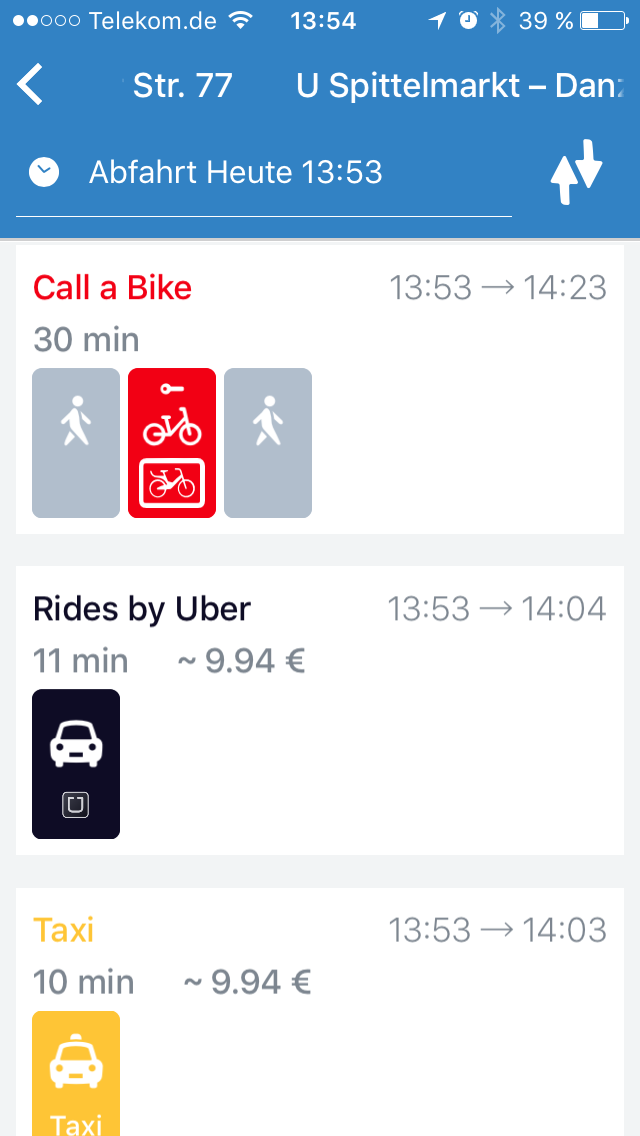
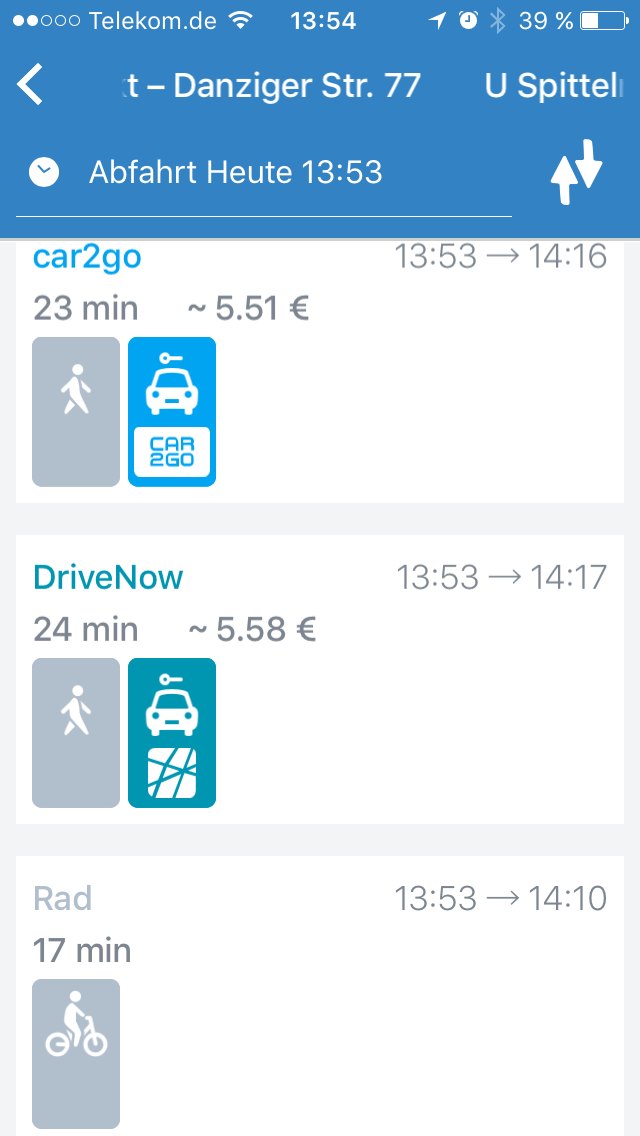
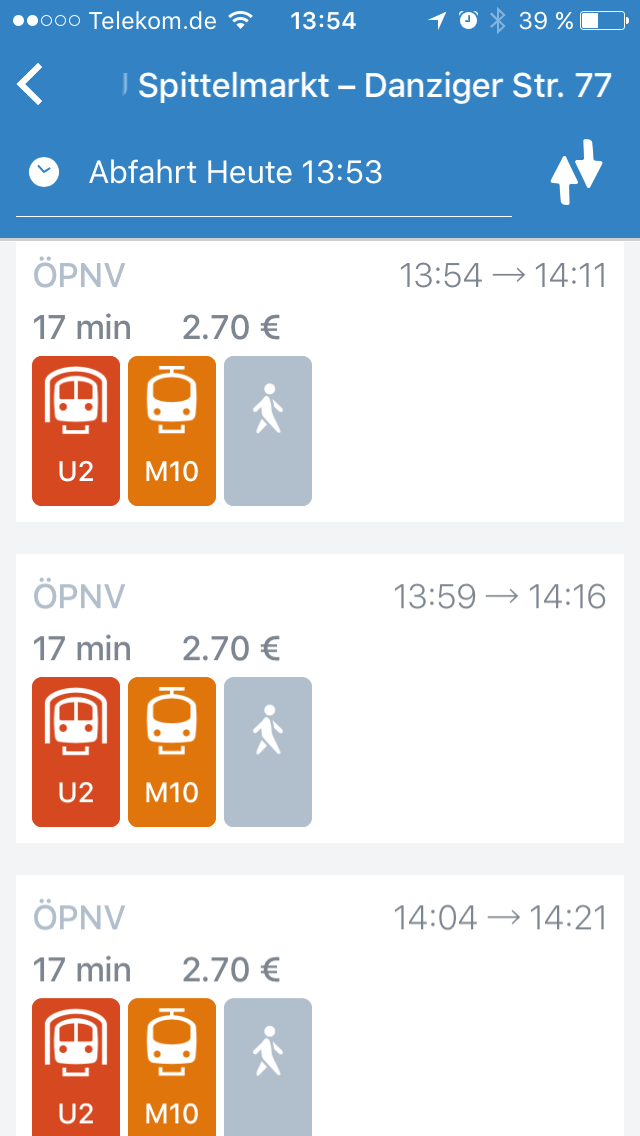
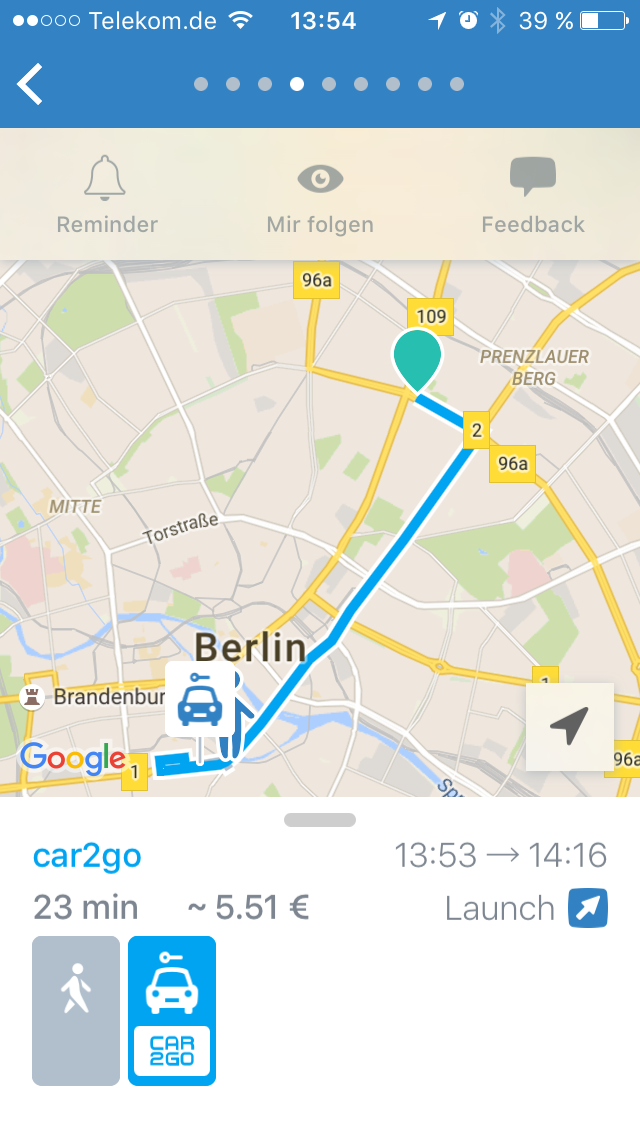
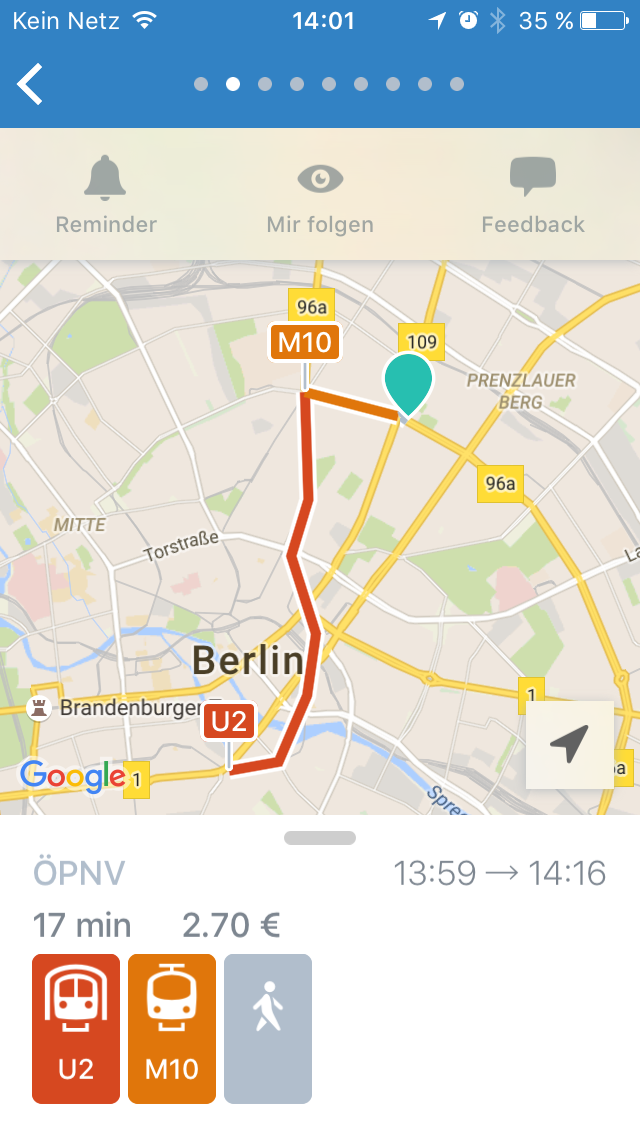
The main visual product for the end-user is the ally app. The app itself finds different ways of travel for your desired route: Whether to take the public transport trains, taxi, care sharing or even rented bikes.. you have it in the palm of your hand, even with prices. It also shows you the route to go with transfer points between the modes of travel.
This makes it easy for everyone to choose the best way to go. But what I miss: what, if I wanted to travel by foot? There is no option in that app! Furthermore the app offers Uber and Taxi connections side by side. The price is the same, which I fairly doubt! The taxi price in Berlin is also undervalued. I paid about 15% more for my last ride!
ally welcome screen
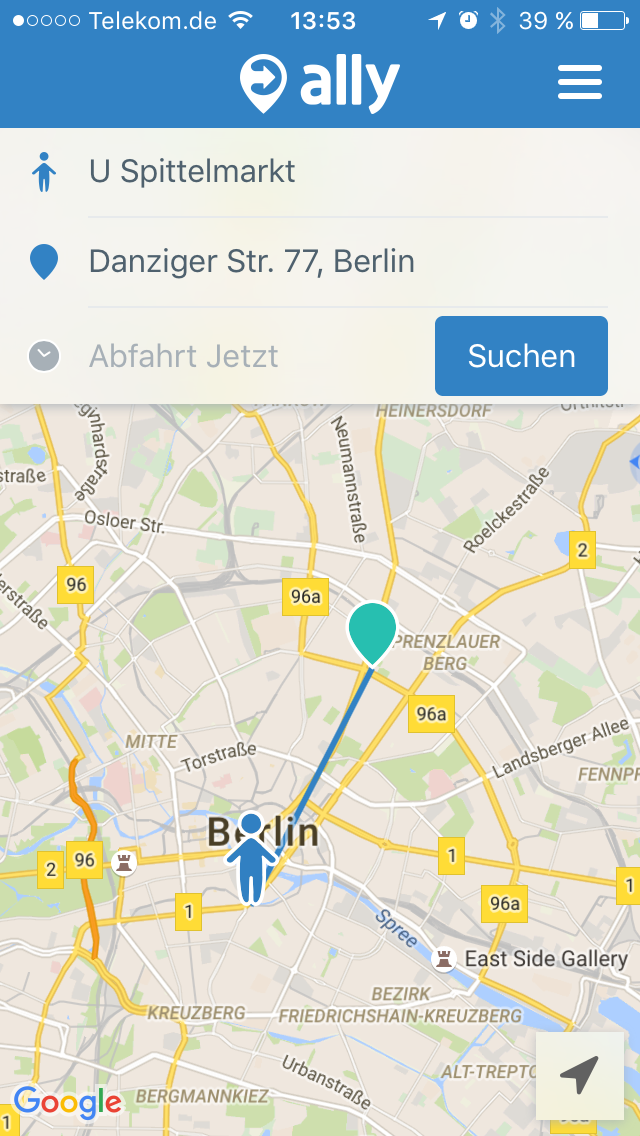
search a route
or with other modes of transport
go by car sharing
go by public transport
you can follow each route with the ally app
even if you change trains!
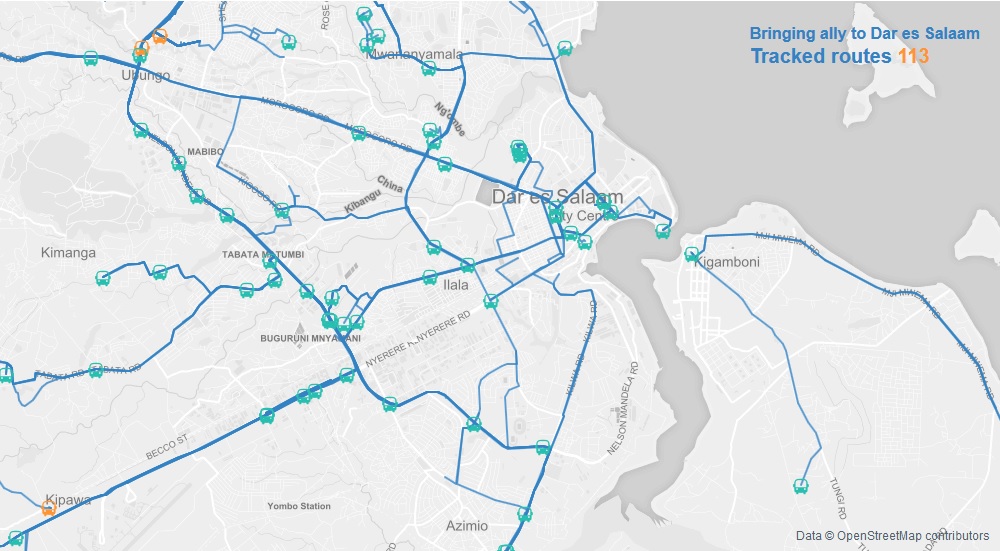
But as the ally employees stated: ally is more than just the app. Ally is crowdsourcing modes of travel using the ally app and a manifold of APIs and (public) partners. Especially in the rapid changing cities throughout the world the planning of public transport and even private bus routes is a hard task. People and infrastructure is changing quickly and so is the need for the network. Ally offer services which enables cities to adopt to these changes and make bus routes more agile.
But there are also certain issues when it comes to traffic, data and connecting different modes of travel in so-called developed countries. Especially with a look at Germany and the institutions with a share of the federal state we see a demand for publishing data so the usage of transport possibilities might be optimized.
Recently, ally approached the minister for traffic and infrastructure: They want real-time access to all the traffic data (GTFS and GTFS realtime) of the Deutsche Bahn and related institutions. Once asked, they got the whole thing started and we might see the Deutsche Bahn data as Open Data in the near future. Well done Ally!
If you want to join this team, make sure to check their career section as they recruit new members for their mission.
SAR images can see through clouds and in darkness, and are therefore very useful for operational monitoring of our seas. Detecting ships, icebergs, wind patterns, and oil spills…
Routing is one of the main tasks when using Google Maps and co. Some systems are directly inserted into cars, some others should show us practical routes to…
Once again I switched from Windows back to Ubuntu as I only needed Win for my granted ESRI license but hated to be “interrupted” by automatic updates, missing…
A lot of you out there are probably working on Windows Systems using ArcGIS and I have to admit that the possibilities with ArcINFO in the background and…